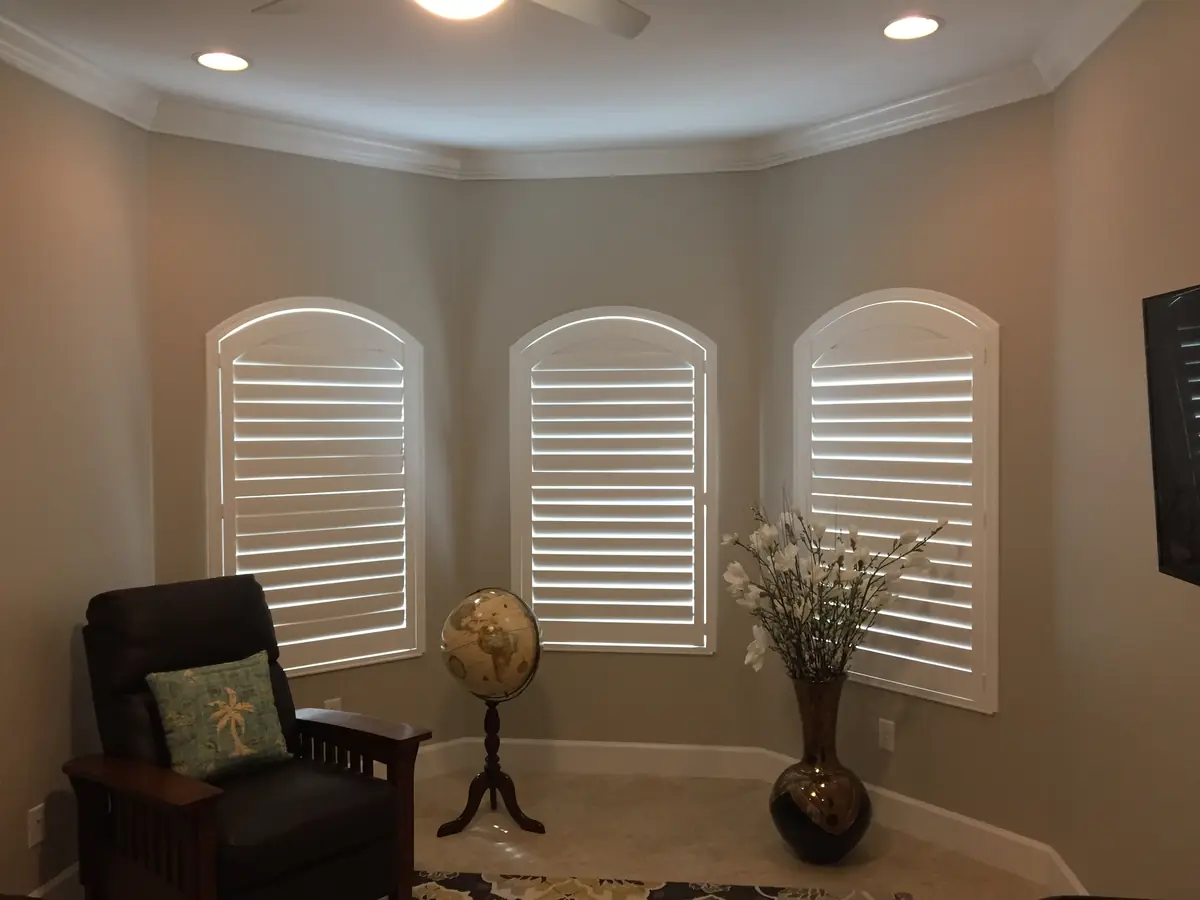
The best plantation shutters for Florida are built from the right material for each room, and a Gulf Coast house has rooms that ask different things of a shutter. Humidity stays high for most of the year, west-facing glass heats the air behind a closed shutter every summer afternoon, and new homes here come with wide sliders and picture windows. We install three materials: natural wood from Norman, composite (PVC), and AlumaCore, which has an aluminum core inside the shutter's parts. Each one answers those conditions differently. If you are still weighing shutters against shades, start with our overview of interior window treatments.
What Florida does to a plantation shutter
Three things wear on a shutter here. Moisture is the first: steam from showers, the kitchen sink, a laundry room with the dryer running, and the damp of a house closed up for the summer. Heat comes second, because the air trapped between a closed shutter and sunny glass heats up fast, and long synthetic parts sag sooner under that load. Width is the third: the wider the panel, the more its stiles and louvers have to carry without bowing.
Wood plantation shutters
Wood is the traditional material and the one to choose when you want a stain finish or the look of real grain. We install Norman wood shutters, which take paint or stain, and because wood is lighter than solid synthetic material, the panels tilt and swing easily.
Wood takes on and gives up moisture with the air around it, so it belongs in rooms that stay air-conditioned and dry: living rooms, bedrooms, dining rooms and offices. Keep it away from showers, tubs and the kitchen sink. If you leave for the summer with the thermostat set high, tell Marty at the estimate, because a closed-up house gets humid and that is hard on wood.
Composite and PVC plantation shutters
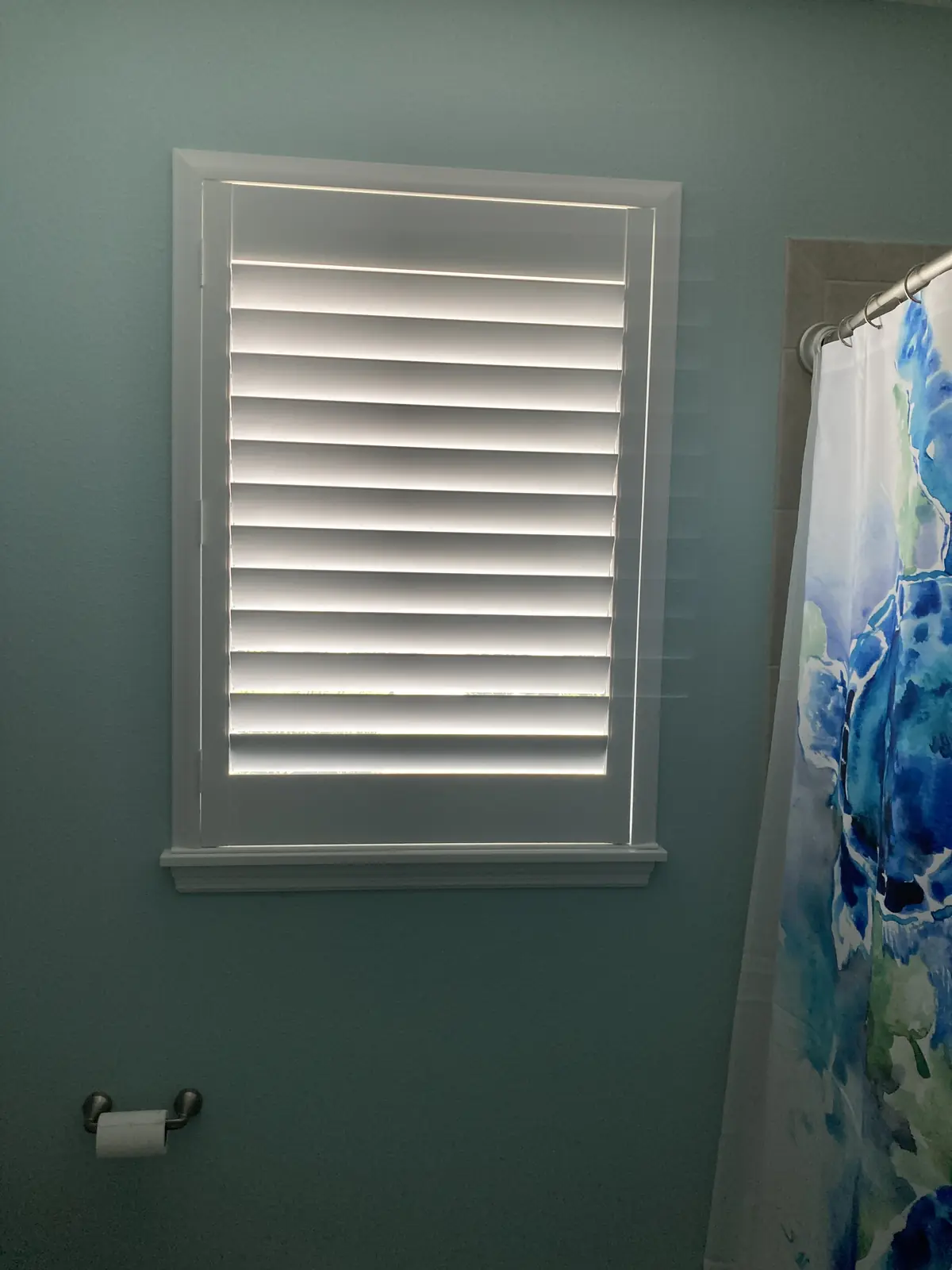
Composite shutters are the synthetic option, and water does not swell them. That puts them in bathrooms, kitchens, laundry rooms and on the door out to the pool, and they wipe clean with a damp cloth. The term covers more than one construction, from solid polymer to an engineered core with a polymer finish, so ask what is inside the one you are shown.
Weight and span are the limits. A plain poly panel tops out at around 24 to 28 inches wide before it starts to sag, so a 36-inch window needs two panels and a center stile, and a wide window or slider needs several. Composite takes paint-grade finishes, so if a stained wood look is the goal, choose wood.
In the right rooms it is a good material. One customer who chose PVC wrote:
“We even had Marty do the work during our absence, and everything turned out perfectly... We are extremely happy with our PVC shutters!”
AlumaCore aluminum-core shutters
AlumaCore shutters have an aluminum core inside each component, mortise-and-tenon joints at the frame corners and a baked-on finish. They are built in Fort Myers, and Gulf Coast Shutter Co. is the only local company from North Tampa to Punta Gorda offering them.
The core is what lets an AlumaCore panel run up to 36 inches wide without bowing or warping. On an eight-foot slider that means three panels where plain poly needs at least four, and on a 36-inch window it means a single panel with no center stile in the middle of the view. AlumaCore is made for arches, eyebrows, French doors and sliders, and an aluminum core does not soften in the heat behind sunny glass the way a long all-poly part can. Read more about AlumaCore plantation shutters and the openings they fit.
Wood vs composite vs AlumaCore at a glance
| Wood (Norman) | Composite / PVC | AlumaCore | |
|---|---|---|---|
| Construction | Natural wood | Synthetic; construction varies by maker | Aluminum core, mortise-and-tenon joints |
| Moisture and steam | Dry, air-conditioned rooms only | Bathrooms, kitchens, laundry | Built to resist moisture and heat |
| Widest single panel | Depends on the line; ask | About 24 to 28 inches before it sags | Up to 36 inches without bowing |
| Finish | Paint or stain | Paint-grade colors | Baked-on finish |
| Best rooms | Living, dining, bedrooms, offices | Baths, kitchens, laundry, pool doors | Wide windows, sliders, arches, west-facing and wet rooms |
The best plantation shutters for Florida, room by room
- Bathrooms with a tub or shower: composite or AlumaCore. Wood stays out.
- Kitchens: composite or AlumaCore over the sink and range. A breakfast nook window away from the water can take wood.
- Laundry rooms: composite or AlumaCore, for the same reason.
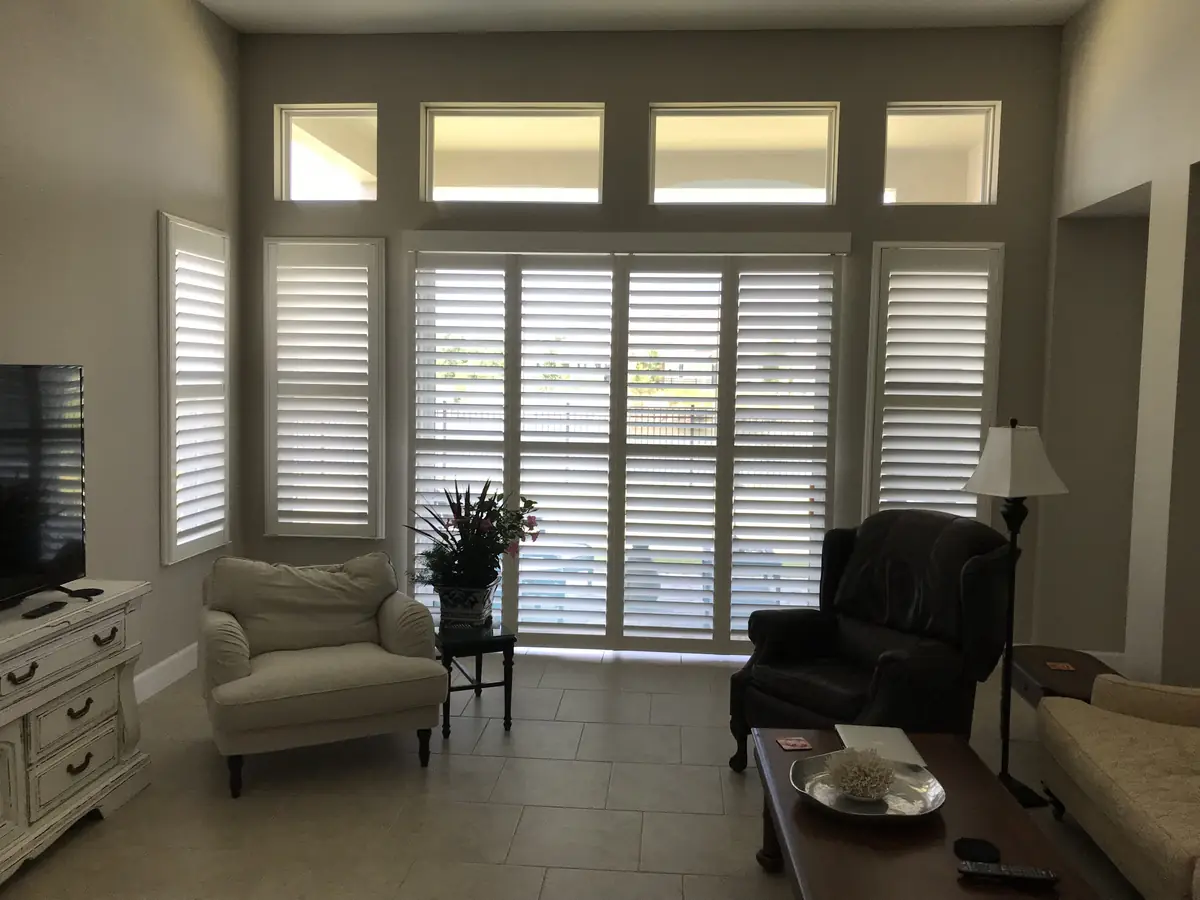
- Great rooms with wide windows or a west-facing slider: AlumaCore, for the 36-inch panels and fewer stiles across the view.
- Dining rooms and offices with wood furniture: wood, if you want a stain that matches.
- Bedrooms: any of the three. If you want the room fully dark, a room-darkening roller shade does that better than any louver.
- Florida rooms and sunrooms: AlumaCore or composite if the room is off the house air conditioning; wood only if it shares it.
- Arched and eyebrow windows: AlumaCore is made for them. Ask about the other materials for your particular shape.
Louver size and frames matter as much as material
Material is only half the specification. Louvers run from about 2.5 to 4.5 inches, and larger louvers give a wider view and more light when open, which suits big windows and modern rooms; smaller louvers suit small windows and traditional rooms. A larger louver also needs more depth to tilt, so it has to clear the glass, the window cranks and the slider handle, and the frame can be built out from the wall to give it room.
Every one of our custom plantation shutters hangs on its own frame, built to the measurements Marty takes at your house. On older block homes, where openings have drifted out of square over the decades, the frame takes up the difference so the panels still swing and close cleanly.
Questions to ask at a plantation shutter estimate
- What is the panel made of, all the way through?
- In this material, how wide can a single panel be before it needs a center stile?
- How many panels will my widest window take?
- Will the louvers clear my window handles and cranks when they tilt?
- Who installs the shutters, and who comes back if one needs adjusting?
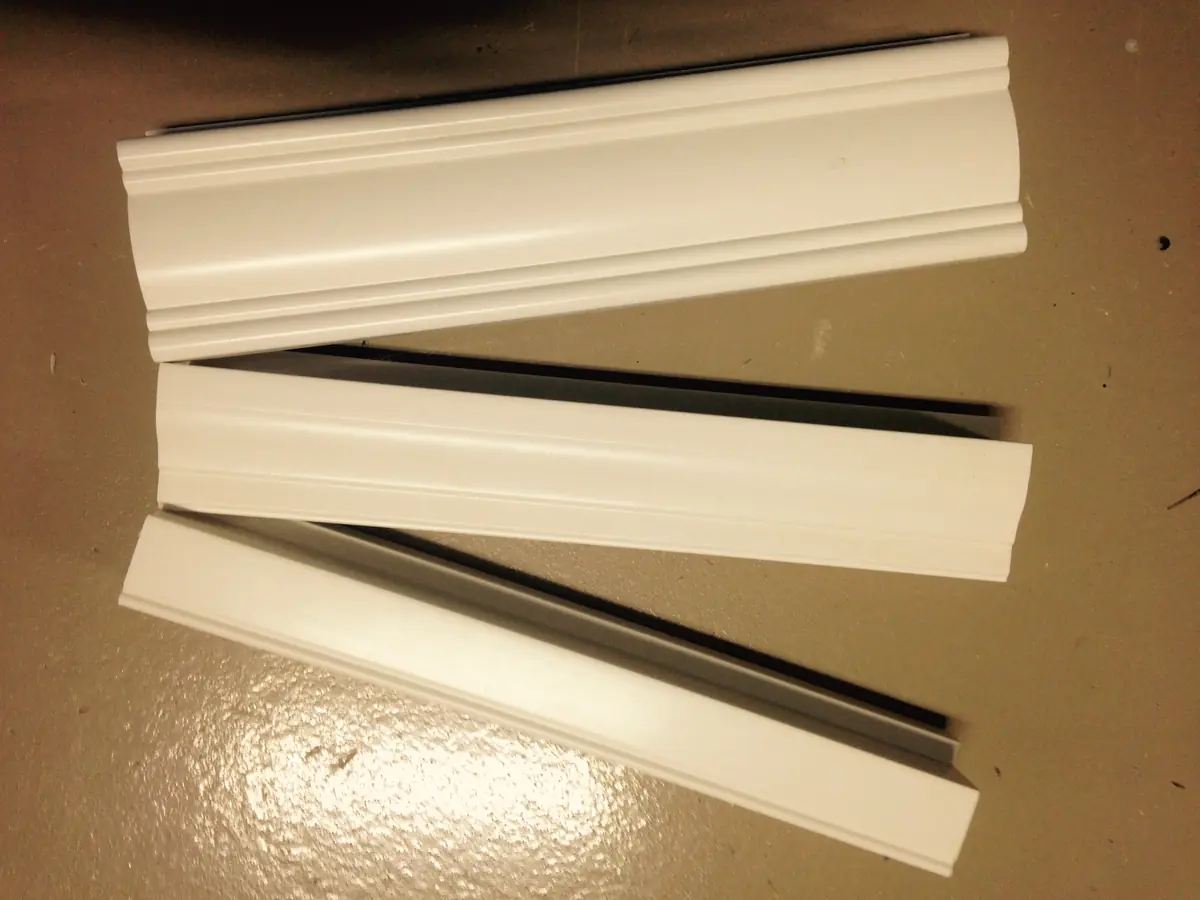
At our free in-home estimate, Marty brings samples of all three materials, so you can see wood, composite and AlumaCore side by side against your own walls and light. He installs the job himself with his son, and installs are never subcontracted. Sliders bring their own decisions, covered in shutters or roller shades for sliding glass doors.
Questions homeowners ask
Are wood plantation shutters a bad idea in Florida?
No, as long as they go in the right rooms. Wood does well in living rooms, bedrooms and dining rooms that stay air-conditioned and dry. Keep it out of bathrooms, kitchens and laundry rooms, where composite or AlumaCore is the better material.
Do vinyl or PVC shutters warp in Florida heat?
Long synthetic parts can sag, especially in wide panels behind hot west-facing glass. Keeping plain poly panels within about 24 to 28 inches wide is the main defense. Where a wider panel is needed, AlumaCore goes to 36 inches without bowing.
What is AlumaCore?
AlumaCore is a plantation shutter with an aluminum core inside its parts, mortise-and-tenon joints and a baked-on finish, built in Fort Myers. Panels run up to 36 inches wide without bowing or warping, and it fits arches, eyebrows, French doors and sliders. We are the only local company from North Tampa to Punta Gorda offering it.
Can I use different materials in different rooms?
Yes, and in a Florida house it makes sense. Match the color and louver size from room to room so the shutters look consistent, and use the samples to compare the whites side by side.
Which material is easiest to clean?
Composite and AlumaCore wipe down with a damp cloth. Wood is best dusted, or wiped with a cloth that is barely damp and then dried.